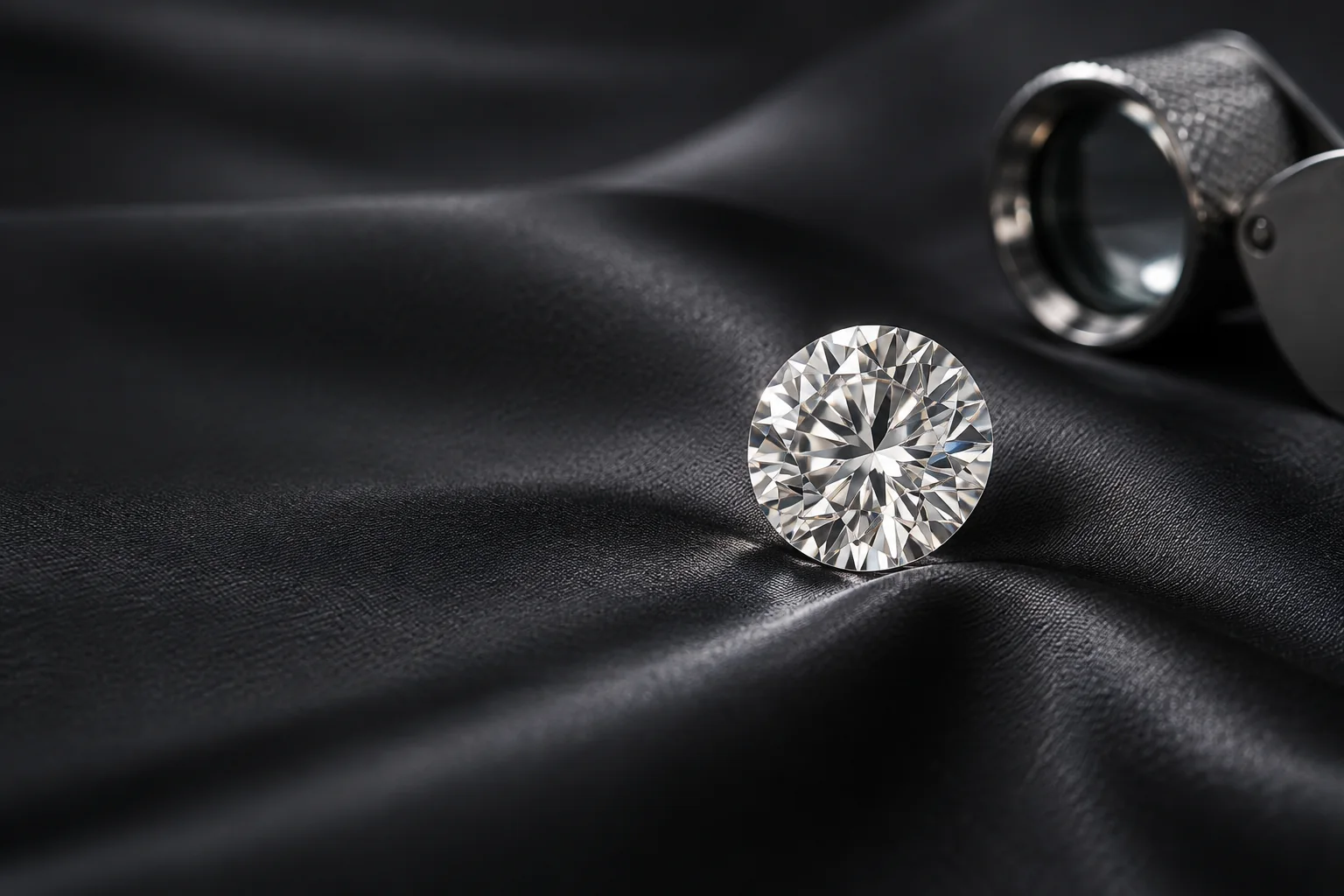
Diamonds carry a singular legacy: geological time made visible, transformed by cutting into light. This guide explains their history, the 4Cs, natural and laboratory-grown diamonds, certificates, shapes, value and the questions that protect a serious purchase.
Start with an independent grading report, then judge cut and appearance with your own eyes. Compare stones graded by the same laboratory, confirm whether each is natural or laboratory-grown, and balance colour, clarity and carat weight around the design you actually want.
The legacy of diamonds
Long before the modern engagement ring, diamonds travelled from historic Indian deposits into royal treasuries and diplomatic gifts. Their hardness, rarity and resistance to wear made them emblems of continuity; advances in cutting later revealed the brilliance that defines modern diamond jewellery.
The Hope Diamond shows how one stone can pass through commerce, monarchy, myth and museum culture. The Smithsonian traces its history from a large blue diamond associated with India’s Golconda region, through the French crown, later private owners and Harry Winston’s 1958 gift to the institution. Its story also offers a useful warning: romance and provenance can add cultural value, but a buyer still needs documented gemological facts.
Today diamonds move between bridal jewellery, important private collections and high jewellery. Old mine and old European cuts attract collectors for their individual proportions, while precisely cut modern brilliants maximise consistent light return. Neither is automatically “better”; they express different ideas of beauty.
The 4Cs of diamond quality
GIA developed the modern language of cut, colour, clarity and carat weight so diamonds could be described consistently. The four factors interact, and no single letter or number predicts whether a stone will look beautiful in a particular setting.
| Factor | What it tells you | What to inspect |
|---|---|---|
| Cut | How effectively a fashioned diamond handles light. | Brightness, fire, scintillation, symmetry and any persistent dark or watery areas. |
| Colour | For colourless-to-light diamonds, how little body colour is present. | Compare face-up stones in the same lighting; the setting metal changes perception. |
| Clarity | The nature, position and visibility of inclusions and blemishes. | Whether characteristics are eye-visible, affect durability or sit prominently under the table. |
| Carat | Weight: one metric carat equals 200 milligrams. | Also compare millimetre dimensions, spread and proportions; weight is not face-up size. |
For round brilliants, the laboratory cut grade is a strong starting point. For fancy shapes such as oval, pear, emerald and cushion cuts, compare videos or view the stones in person because outline, bow-tie effect and light performance can vary even when the paperwork looks similar.
Natural vs laboratory-grown diamonds
Natural diamonds formed in the earth; laboratory-grown diamonds are produced by HPHT or CVD processes. Both are diamond, while moissanite and cubic zirconia are different materials used as diamond simulants. Visual inspection alone is not a reliable way to identify origin, so the report and laser inscription matter.
The choice is personal. A natural diamond offers geological rarity and a mature collector market. A laboratory-grown diamond can offer more size or higher colour and clarity for the same initial budget. Do not assume either category guarantees ethical or environmental performance: ask for specific sourcing, energy and chain-of-custody information rather than relying on broad claims. Resale expectations and replacement value should be discussed before purchase.
Diamond shapes and settings
Round brilliant is the reference for sparkle and cut research. Emerald and Asscher cuts emphasise clarity, geometry and broad flashes. Oval, pear and marquise can look elongated on the hand, while cushion and radiant cuts combine softened outlines with lively faceting.
A setting must suit the wearer as well as the stone. Prongs expose more of the diamond; bezels offer greater edge protection; halos alter perceived scale; pavé adds surface light but needs maintenance. Ask how high the ring sits, whether a wedding band will fit beside it, and how future resizing may affect the design.
For celebrity inspiration, see our guide to the biggest celebrity engagement rings, which separates reported measurements from estimates.
Diamond buying checklist
- Set the total jewellery budget, including the setting, tax, insurance and future maintenance.
- Choose natural or laboratory-grown before comparing prices.
- Compare reports from the same independent laboratory and verify the report number online.
- Inspect the diamond in more than one lighting environment and check its millimetre dimensions.
- Ask about treatments, fluorescence, durability concerns and return conditions in writing.
- Confirm the metal, ring size, prong style, delivery date and aftercare.
- Obtain an itemised receipt and arrange appropriate insurance.
A grading report describes the submitted stone; it is not a price appraisal or a guarantee of beauty. Independent valuation can be appropriate for important pieces.
How to care for diamond jewellery
Diamond is highly resistant to scratching, yet it can chip at vulnerable points and its setting can wear. Clean most untreated diamond jewellery with warm water, mild soap and a soft brush, checking first that the mounting is secure. Store pieces separately because a diamond can scratch other gems and metals. Have frequently worn rings inspected periodically for loose prongs.
Diamond frequently asked questions
Which diamond C matters most?
For visual impact, cut is often the best place to protect quality, especially in round brilliants. The best balance still depends on shape, lighting, setting and personal colour and clarity preferences.
Does a bigger carat diamond look larger?
Usually, but not always. Carat measures weight, while face-up size depends on dimensions, shape and proportions. Compare millimetres as well as carats.
Do I need a diamond certificate?
For a significant purchase, request an independent laboratory report and verify it with the issuing laboratory. The report should identify whether the diamond is natural or laboratory-grown and disclose detected treatments.
Are antique-cut diamonds less brilliant?
They often show broader, slower flashes and more individual facet patterns than modern precision cuts. Many collectors value that character rather than judging them by a modern brilliant standard.
Sources and further reading
- GIA: The 4Cs of Diamond Quality
- GIA: Comparing loose diamonds
- Smithsonian: History of the Hope Diamond
Editorially reviewed 14 September 2026. Educational information only; seek an independent gemologist for a high-value purchase.